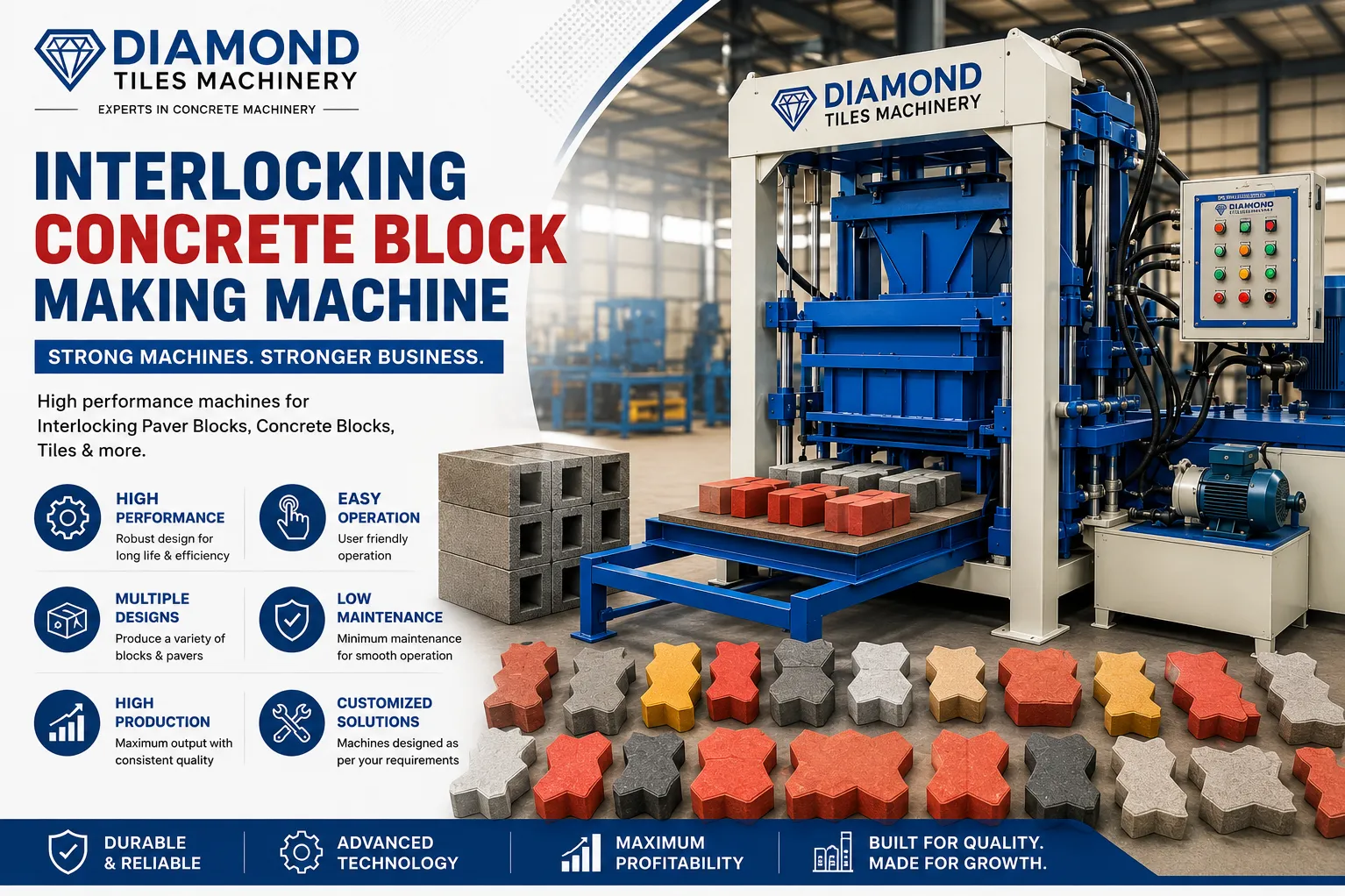
Interlocking Concrete Block Making Machine: Complete Guide for Buyers and Manufacturers
Interlocking concrete blocks are widely used for paving applications where a practical, modular, and visually adaptable surface is required. They are commonly used for walkways, parking areas, driveways, landscaping, commercial spaces, and other suitable paving projects.
For manufacturers, producing these blocks consistently requires the right combination of concrete mix, moulds, vibration or pressing, demoulding, and curing. An Interlocking Concrete Block Making Machine brings several of these production steps into a more organized manufacturing process.
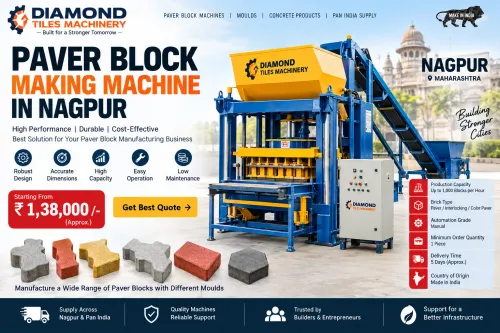
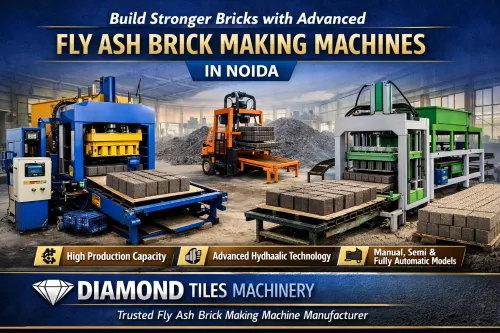
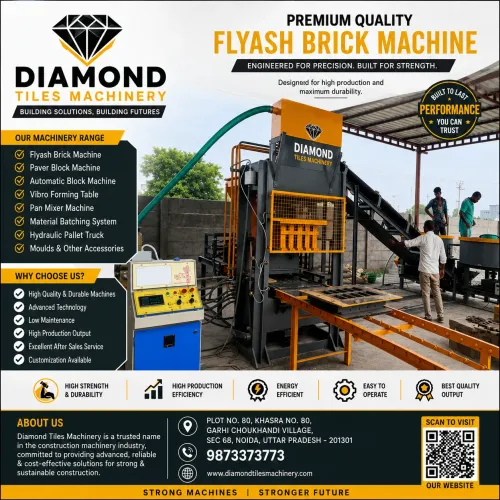
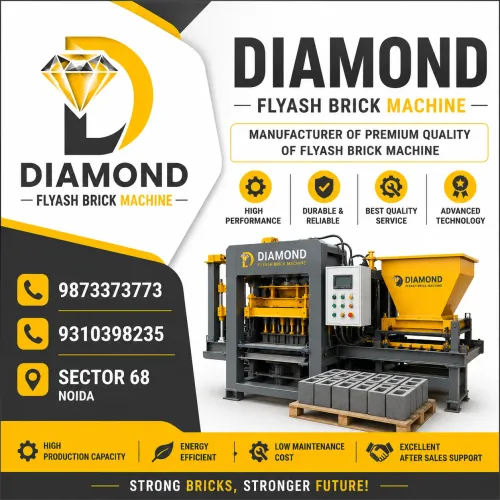
Diamond Tiles Machinery, based in Noida, Uttar Pradesh, offers interlocking concrete block making machines, paver block machines, vibrating tables, moulds, demoulding machines, concrete mixers, and other equipment used in concrete-product manufacturing. The company's website identifies the business as a proprietorship established in 2019 and lists Imran as proprietor.
What Is an Interlocking Concrete Block Making Machine?
An interlocking concrete block making machine is machinery designed to form concrete mixtures into blocks or pavers of a specified shape and size. Depending on the machine configuration, the manufacturing process can involve vibration, pressing, moulding, or a combination of these processes.
The final product depends on several factors, including the mould design, concrete mix, compaction method, machine settings, curing process, and operator practices.
Diamond Tiles Machinery lists an Interlocking Concrete Block Making Machine among its products and also provides customized machine configurations for customer requirements.
How Does an Interlocking Block Making Machine Work?
Although the exact production process depends on the machine model, a typical interlocking block manufacturing setup involves several stages.
1. Preparing the Concrete Mix
Cement, stone dust, stone chips, and water are commonly used in concrete paving products. Diamond Tiles Machinery lists cement, stone dust, and stone chips as raw materials for its paver block machinery.
The mix needs to be prepared according to the required product and manufacturing process.
2. Filling the Mould
The prepared material is placed into the selected mould. The mould determines the basic shape and dimensions of the finished interlocking block or paver.
Different moulds can therefore allow manufacturers to produce different designs and product formats.
3. Vibration and Compaction
Vibration helps distribute the concrete mixture within the mould and supports the forming and compaction process. Some machine configurations additionally use pressing or hydraulic systems.
Diamond Tiles Machinery's listed interlocking concrete block machinery includes a vibration and pressing system and an automatic pressing and demoulding arrangement on the described configuration.
4. Demoulding
After forming, the product is removed from the mould. Depending on the machine setup, demoulding can be performed manually or through dedicated demoulding equipment.
Diamond Tiles Machinery also lists a Paver Block Demoulding Machine as part of its equipment range.
5. Curing
Freshly manufactured concrete blocks require appropriate curing before being put into their intended application. The curing process is important for allowing the concrete to develop its required properties.
Manufacturers should follow an appropriate curing procedure based on their concrete mix, product requirements, and applicable technical practices.
What Types of Products Can Be Manufactured?
The exact products possible depend on the machine, mould, material formulation, and production configuration.
Depending on the selected setup, manufacturers may produce products such as:
- Interlocking paver blocks
- Concrete paving blocks
- Colour pavers
- Cement tiles
- Designer paving products
- Kerb stones
- Concrete blocks
- Other mould-based concrete products
Diamond Tiles Machinery's published product range includes paver block machines, concrete block machines, interlocking block machines, tile-making machines, paver moulds, vibrating tables, and related equipment.
Manual, Semi-Automatic or Automatic: Which Machine Should You Choose?
The appropriate automation level depends on production requirements, available labour, investment, workspace, product type, and expected output.
Manual Machines
Manual machinery can be considered for smaller production setups where the manufacturer wants a relatively straightforward production arrangement.
Diamond Tiles Machinery lists manual paver block machines, including models with vibration-based production. One listed DTM70 model has a stated capacity of 1,000–1,500 blocks per hour; actual output can vary with operating conditions and production practices.
Semi-Automatic Machines
Semi-automatic machinery can reduce some manual handling and may be appropriate for manufacturers looking for a balance between investment and production efficiency.
Diamond Tiles Machinery lists semi-automatic paver tile machinery with a stated capacity range of 500–1,000 blocks per hour for one model.
Automatic Machines
Automatic systems are generally considered when production volume and process automation are major priorities.
The company lists automatic machinery for concrete products and provides configurations where capacity and specifications can be customized.
The important point is that machine capacity should not be treated as a guaranteed production figure. Actual output can vary depending on mould size, concrete mix, labour efficiency, machine configuration, operating cycle, curing arrangements, and other production conditions.
What Determines the Production Capacity?
Production capacity is one of the most important factors when selecting an interlocking block machine.
Actual output can depend on:
Machine cycle: The time required for each production cycle affects hourly output.
Mould configuration: The number and size of cavities influence how many products can be formed during a cycle.
Concrete mix: Material consistency and workability affect mould filling and compaction.
Operator efficiency: Material handling, mould preparation, demoulding, and stacking can influence production.
Machine configuration: Manual, semi-automatic, and automatic systems have different production workflows.
Curing and handling: The production area must also be capable of handling the quantity of freshly manufactured products.
Diamond Tiles Machinery itself notes that machine capacity is for guidance and can vary according to materials and other operating factors.
What Raw Materials Are Used?
Interlocking concrete blocks are generally manufactured using cement-based concrete mixtures.
The materials commonly associated with the machinery listed by Diamond Tiles Machinery include:
- Cement
- Stone dust
- Stone chips
- Water
- Pigments or colour materials where coloured products are required
The correct formulation depends on the product design and required performance. Manufacturers should determine their mix design appropriately rather than relying on a single recipe for every product.
Why Are Moulds Important?
The mould is one of the most important components of an interlocking block manufacturing setup because it determines the shape and dimensions of the product.
A manufacturer producing multiple designs may require multiple mould configurations.
Diamond Tiles Machinery lists several mould categories, including paver moulds, silicone/plastic moulds, rubber paver moulds, PVC rubber interlocking paver moulds, tile moulds, and related mould products.
Before purchasing a machine, buyers should confirm:
- Required block dimensions
- Mould compatibility
- Number of cavities
- Material of the mould
- Expected mould life
- Availability of replacement moulds
- Whether customized designs are possible
Equipment Required for an Interlocking Block Manufacturing Setup
A complete production setup may require more than the primary block-making machine.
Depending on the manufacturing method, supporting equipment can include:
Concrete Mixer: Used to prepare the concrete mixture.
Colour Mixer: Useful where coloured or face-mix paving products are manufactured.
Vibrating Table: Used in suitable production processes for concrete products.
Supporting Table: Supports material handling and production operations in certain setups.
Hopper and Feeding System: Can be used in semi-automatic production arrangements.
Conveyor System: Helps move materials or finished products within the production line.
Demoulding Machine: Helps with product removal from moulds where applicable.
Diamond Tiles Machinery lists these types of supporting machinery and equipment within its product range.
How to Choose the Right Interlocking Concrete Block Making Machine
Before placing an order, buyers should first define their actual production requirements.
Consider Your Required Output
Estimate the number of blocks or pavers you expect to manufacture per day rather than selecting a machine solely based on its maximum advertised capacity.
Consider the Product Design
Tell the machinery supplier the exact block or paver design you want to manufacture. Mould compatibility is essential.
Consider Automation
Choose manual, semi-automatic, or automatic machinery according to your labour availability, investment plan, production target, and workflow.
Check Power Requirements
Confirm the electrical power requirement and available power supply before installation.
Check Space Requirements
Consider the space required not only for the machine but also for raw materials, mixing, moulding, demoulding, stacking, curing, and finished-product storage.
Ask About Customization
If you require a specific block size, mould design, production capacity, or machine configuration, discuss these requirements before finalizing the machine.
Diamond Tiles Machinery states that machinery can be customized according to customer requirements, including different sizes, specifications, power, and production arrangements for relevant equipment.
What Is the Price of an Interlocking Concrete Block Making Machine?
There is no single price for every interlocking concrete block making machine because the cost depends on the machine model, automation level, capacity, mould arrangement, specifications, and additional equipment.
Diamond Tiles Machinery's website currently lists an Interlocking Concrete Block Making Machine at approximately ₹1.35 lakh per set and an Interlocking Block Making Machine at approximately ₹1.30 lakh per set. These are listed prices and should be confirmed with the company because specifications and pricing can change.
For a complete manufacturing setup, the total investment may also include mixers, moulds, vibrating equipment, demoulding equipment, electrical installation, handling arrangements, raw materials, and curing space.
Why Choose Diamond Tiles Machinery?
Diamond Tiles Machinery is based in Sector 68, Noida, Gautam Buddha Nagar, Uttar Pradesh, India. Its website identifies the business as a proprietorship established in 2019 and lists its GST registration details and product range.
The company offers machinery and equipment associated with paver and concrete-product manufacturing, including:
- Interlocking Concrete Block Making Machines
- Paver Block Making Machines
- Concrete Block Making Machines
- Paver Tile Making Machines
- Vibrating Tables
- Paver Moulds
- Demoulding Machines
- Concrete Mixers
- Supporting production equipment
The company also states that it supplies products across India.
For buyers, discussing the intended product, required output, mould design, available space, and desired automation level with the supplier is a practical way to identify a suitable machine configuration.
Applications of Interlocking Concrete Blocks
Interlocking blocks and pavers can be used for a wide variety of suitable paving applications.
Common applications include:
Residential Areas
They can be used for driveways, garden paths, courtyards, walkways, and other outdoor areas.
Commercial Properties
They may be used around shops, offices, commercial buildings, parking areas, and entrances where an appropriate paving product is required.
Industrial Areas
Depending on the product specifications and project requirements, concrete paving products can be used in selected industrial areas, internal roads, and surrounding spaces.
Landscaping
Different colours, shapes, and patterns make interlocking pavers suitable for various landscaping and decorative paving applications.
Frequently Asked Questions
What is an interlocking concrete block making machine?
It is machinery used to mould concrete mixtures into interlocking blocks or pavers of specified shapes and dimensions.
What materials are used for interlocking paver blocks?
Common materials include cement, stone dust, stone chips, and water. Pigments may also be used for coloured products.
Can one machine make different block designs?
The ability to manufacture different designs depends on machine configuration and compatible moulds. Buyers should confirm mould compatibility before purchasing.
How much does an interlocking concrete block making machine cost?
Diamond Tiles Machinery currently lists an interlocking concrete block making machine at approximately ₹1.35 lakh per set. Prices can vary according to specifications, configuration, and requirements, so buyers should request a current quotation.
What affects the production capacity?
Machine cycle, mould configuration, concrete mix, operator efficiency, automation level, material handling, and production conditions can all affect actual output.
Is an automatic machine better than a manual machine?
Not necessarily. The best option depends on the manufacturer's production volume, investment, labour availability, available space, and desired level of automation.
What other machinery may be required?
Depending on the plant design, supporting equipment can include concrete mixers, colour mixers, vibrating tables, supporting tables, feeding systems, conveyors, moulds, and demoulding machines.
Does Diamond Tiles Machinery provide customized machinery?
The company states that relevant machinery can be customized according to customer requirements, including size, specifications, power, and production arrangements.
Final Thoughts
Choosing an Interlocking Concrete Block Making Machine should begin with the product you want to manufacture and the production volume you actually need. Machine capacity, mould compatibility, automation, raw materials, workspace, power requirements, and supporting equipment all need to be considered together.
Diamond Tiles Machinery provides interlocking block, paver block, tile-making, moulding, vibrating, mixing, and related machinery from its Noida, Uttar Pradesh operation.
If you are planning a new interlocking block manufacturing setup or upgrading an existing production line, share your required block design, expected daily production, and preferred automation level with Diamond Tiles Machinery to discuss a suitable machine configuration.
Diamond Tiles Machinery
Keywords