Tile Hardener Chemical: Uses, Benefits and Applications for Concrete Tiles and Paver Blocks
Concrete tiles and paver blocks are widely used for pathways, parking areas, driveways, walkways, landscaping, and other construction applications. While the quality of the concrete mix is important, the condition and performance of the finished surface also matter.
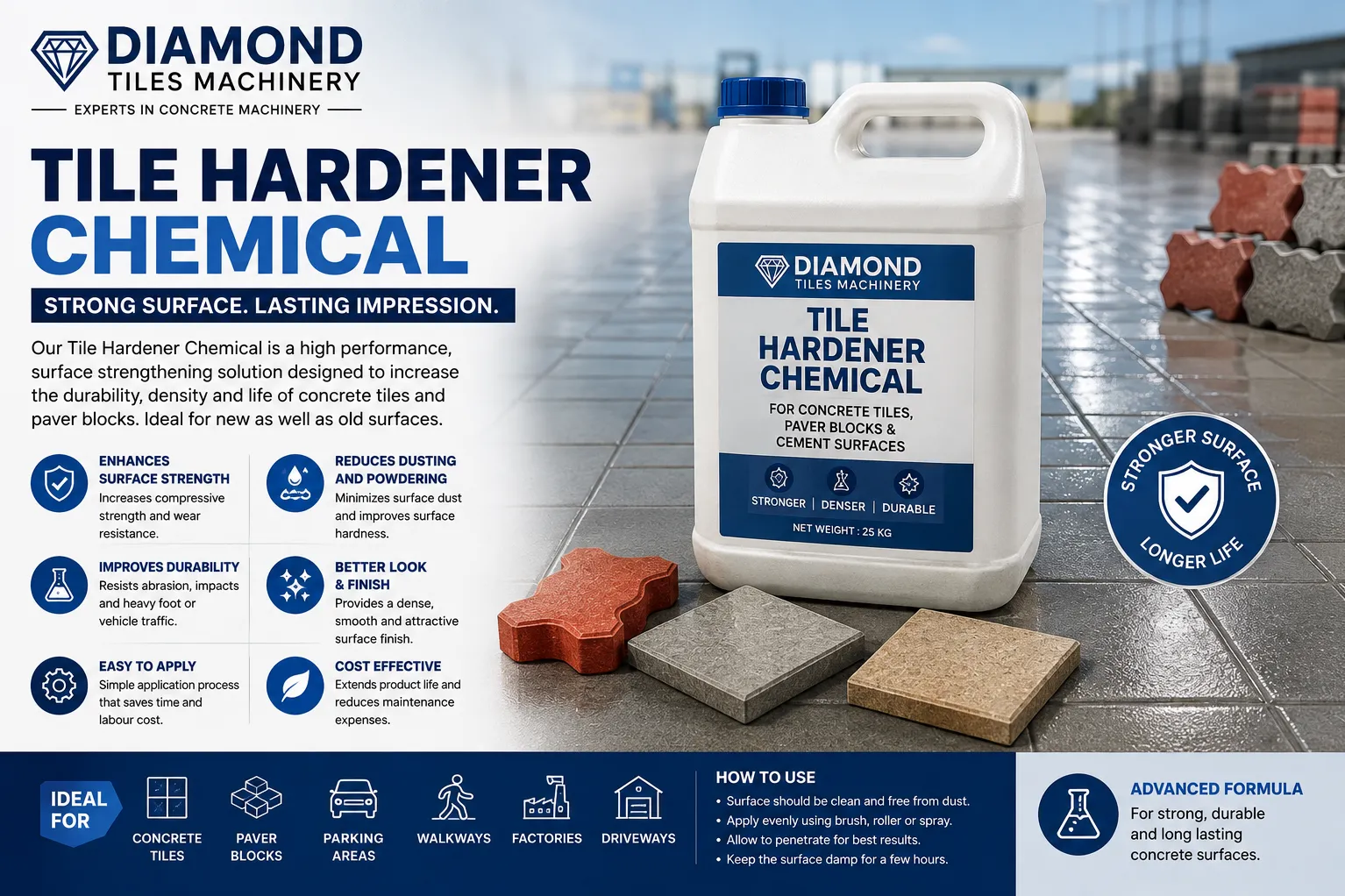
Tile Hardener Chemical is used as a surface-treatment product for suitable cement-based and concrete surfaces. Depending on the formulation and application method, a tile hardener can help improve surface characteristics such as hardness, durability, density, and resistance to everyday wear.
For manufacturers and contractors working with concrete tiles, paver blocks, and similar products, selecting the right hardening solution can be an important part of achieving the desired surface finish and performance.
What Is Tile Hardener Chemical?
Tile Hardener Chemical is a chemical treatment used on suitable concrete and cement-based surfaces to improve their surface properties.
It is commonly considered for applications where the surface needs better resistance to normal abrasion, dusting, and everyday wear. The actual performance depends on the product formulation, concrete quality, preparation, application method, curing, and service conditions.
Tile hardener products can be particularly relevant to manufacturers of concrete tiles and paver blocks because these products are exposed to foot traffic, vehicle movement, weather, and regular surface wear depending on where they are installed.
Why Is Tile Hardener Used?
Concrete products need a properly prepared and cured surface to perform well in service. Surface hardening treatments can be used when additional surface protection or hardness is required.
A suitable tile hardener may help manufacturers and users achieve:
- A harder surface
- Improved resistance to normal surface wear
- Reduced surface dusting
- Better surface durability
- Improved appearance and finish
- Longer service performance under appropriate conditions
However, a chemical hardener is not a substitute for good-quality concrete, correct mix design, proper compaction, or appropriate curing. These factors remain important for the overall performance of concrete products.
Tile Hardener Chemical for Concrete Tiles
Concrete tiles are manufactured in different designs, thicknesses, colours, and finishes. Their surfaces can experience regular handling and traffic after installation.
A suitable hardening treatment can be considered when the objective is to improve the surface characteristics of the finished tile.
The result depends on factors such as:
Concrete quality: The underlying concrete must be appropriately manufactured.
Surface condition: The surface should be properly prepared before treatment.
Application: The hardener should be applied according to the manufacturer's recommended procedure.
Curing: Proper curing remains important for concrete performance.
Service conditions: The expected traffic, environment, and application should be considered when selecting a product.
Tile Hardener for Paver Blocks
Paver blocks are frequently used in areas exposed to walking, vehicles, weather, and repeated surface contact. Because of this, surface durability is an important consideration.
Tile Hardener Chemical can be used as part of a suitable surface-treatment system for compatible paver block products.
It can be particularly relevant for manufacturers looking to improve the surface characteristics of concrete paving products before they reach the market.
The correct product and application procedure should always be selected according to the manufacturer's technical recommendations.
Key Benefits of Tile Hardener Chemical
Helps Improve Surface Hardness
A suitable tile hardener is designed to improve the hardness of the treated surface. This can be useful for concrete tiles and paving products that experience everyday wear.
Helps Reduce Surface Dusting
Surface dusting can affect the appearance and usability of concrete surfaces. An appropriate hardening treatment can help reduce dusting when applied correctly to a suitable surface.
Supports Surface Durability
Concrete tiles and paver blocks may be exposed to abrasion and repeated use. A suitable hardener can support improved surface durability as part of a properly designed concrete and finishing system.
Can Improve Surface Appearance
A properly treated concrete surface can have a more consistent and finished appearance. The final appearance depends on the underlying concrete, surface preparation, application, and product characteristics.
Suitable for Different Concrete Applications
Depending on the specific product formulation, tile hardener chemicals may be used with suitable concrete tiles, paver blocks, and other cement-based surfaces.
Users should always check the product's technical information before applying it to a particular material.
How Is Tile Hardener Chemical Applied?
The application method depends on the particular tile hardener product. Therefore, the manufacturer's technical instructions should always take priority.
A typical surface-treatment process may involve the following stages:
Step 1: Prepare the Surface
The surface should be clean and free from loose dust, dirt, oil, and other contaminants that could interfere with treatment.
Step 2: Prepare the Product
Prepare or dilute the chemical according to the manufacturer's specified instructions. Do not assume that the same dilution ratio is suitable for every product.
Step 3: Apply Evenly
Apply the product uniformly over the recommended surface using the application method specified for the product.
Step 4: Allow the Treatment to Work
Allow the product to react, penetrate, dry, or cure according to its technical instructions.
Step 5: Follow the Recommended Curing or Finishing Process
The final procedure depends on the product formulation and intended application.
Always refer to the manufacturer's technical data sheet and safety instructions before use.
Where Can Tile Hardener Chemical Be Used?
Depending on the formulation and manufacturer's recommendations, tile hardener products may be suitable for applications such as:
Concrete Tiles
Used for suitable cement-based tiles where improved surface hardness and wear resistance are required.
Paver Blocks
Suitable products may be used for paver blocks intended for pathways, parking areas, driveways, and other paving applications.
Walkways
Concrete walkways can experience repeated foot traffic, making surface performance an important consideration.
Parking Areas
Paved parking areas can experience repeated vehicle movement and surface abrasion.
Driveways
Driveways may require surfaces capable of handling regular traffic and environmental exposure.
Industrial and Commercial Areas
Depending on the product specifications and project requirements, suitable concrete surfaces in commercial or industrial environments may also benefit from an appropriate hardening treatment.
Factors to Consider Before Buying Tile Hardener Chemical
Choosing a tile hardener should not be based only on price. Buyers should evaluate the product according to their actual application.
Type of Surface
Confirm whether the product is suitable for your concrete tile, paver block, cement surface, or other intended material.
Application Method
Check whether the product is designed for the application method available at your manufacturing unit or project site.
Coverage
Ask the supplier for the recommended coverage under actual application conditions rather than assuming a fixed coverage rate.
Drying and Curing Requirements
Different chemical products can have different application, drying, reaction, and curing requirements.
Compatibility
Check compatibility with pigments, sealers, coatings, curing compounds, or other chemicals that may already be present on the surface.
Technical Documentation
A reliable product should be accompanied by appropriate technical information and safety instructions.
Tile Hardener Chemical for Tile and Paver Block Manufacturers
For manufacturers, surface treatment is only one part of producing a good concrete product.
The overall production process can involve:
Raw material selection → Concrete mixing → Mould filling → Vibration/compaction → Demoulding → Curing → Surface treatment → Quality inspection → Packing/storage
The quality of the finished product depends on the complete manufacturing process rather than a single chemical treatment.
This is particularly important for businesses producing interlocking paver blocks, concrete tiles, and other moulded cement products.
Tile Hardener Chemical and Concrete Product Quality
A surface hardener should be viewed as a component of a broader quality-control process.
Manufacturers should pay attention to:
- Raw material consistency
- Concrete mix proportions
- Proper mixing
- Mould condition
- Compaction
- Demoulding
- Curing
- Surface preparation
- Chemical application
- Storage and handling
Following a consistent production process can help manufacturers maintain more predictable product quality.
Why Choose the Right Supplier?
The performance of a tile hardener depends not only on the chemical itself but also on selecting a product appropriate for the intended surface and application.
Before purchasing, ask the supplier about:
- Product specifications
- Recommended applications
- Coverage
- Application procedure
- Storage requirements
- Shelf life
- Safety precautions
- Compatibility
- Packaging options
- Technical support
This information allows manufacturers, contractors, and buyers to make a more informed purchasing decision.
Diamond Tiles Machinery – Tile Hardener Chemical
Diamond Tiles Machinery, based in Noida, Uttar Pradesh, supplies machinery and products associated with concrete tile, paver block, and related concrete-product manufacturing.
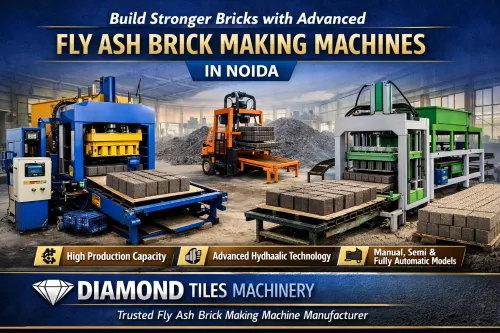
Its product range includes paver block making machines, interlocking block machinery, concrete block machines, tile-making equipment, paver moulds, vibrating tables, demoulding machines, concrete mixers, and related products.
For manufacturers involved in concrete tiles and paver blocks, having access to both appropriate production equipment and suitable supporting products can help create a more organized manufacturing workflow.
When selecting a Tile Hardener Chemical, customers should discuss their specific tile or paver product, surface condition, production process, and intended application with the supplier to identify an appropriate solution.
Frequently Asked Questions About Tile Hardener Chemical
What is Tile Hardener Chemical?
Tile Hardener Chemical is a surface-treatment product designed for suitable concrete and cement-based surfaces to improve surface characteristics such as hardness and resistance to normal wear.
Can Tile Hardener Chemical be used for paver blocks?
A suitable formulation may be used for paver blocks, but compatibility should always be confirmed with the product supplier before application.
Does tile hardener increase concrete strength?
A surface hardener primarily addresses the characteristics of the treated surface. It should not be considered a replacement for proper concrete mix design, compaction, or curing.
How should Tile Hardener Chemical be applied?
Application depends on the specific product. Surface preparation, dilution, application method, coverage, drying, and curing requirements should be followed according to the manufacturer's technical instructions.
Can it reduce dusting on concrete surfaces?
A suitable surface-hardening treatment can help reduce surface dusting when correctly applied to a compatible surface.
Can tile hardener be used on coloured paver blocks?
It may be suitable for some coloured concrete products, but compatibility with the pigment and surface finish should be confirmed before application.
How much Tile Hardener Chemical is required?
The required quantity depends on the product's recommended coverage, surface condition, application method, and concentration. The manufacturer's technical documentation should be used to determine the correct quantity.
Is Tile Hardener Chemical suitable for old concrete surfaces?
Some hardening products are designed for existing concrete, while others may be intended for new or specific surfaces. Always check the manufacturer's recommended application before treating an existing surface.
Conclusion
Tile Hardener Chemical can be a useful surface-treatment solution for suitable concrete tiles, paver blocks, and cement-based surfaces where improved surface hardness and resistance to everyday wear are required.
However, good surface performance starts with quality raw materials, appropriate concrete production, proper compaction, adequate curing, and correct surface preparation. A hardening treatment should complement these processes rather than replace them.
For concrete tile and paver block manufacturers, selecting a suitable chemical based on the product type, application conditions, coverage, compatibility, and manufacturer's technical recommendations is the best approach.
Diamond Tiles Machinery provides machinery and related products for the concrete tile and paver block manufacturing industry from Noida, Uttar Pradesh. Contact the company to discuss your specific product and application requirements.
Keywords